



If you want to experience wildlife safaris in North Bengal, plan your trip to Dooars between October and March.
This winter window offers comfortable weather and ensures that all major national parks are fully accessible to the public.
Planning your trip within these months ensures clear skies, pleasant weather, and the highest chance of spotting rhinos and elephants in the wild.
Dooars is a paradise of dense forests, sprawling tea gardens, and rich wildlife, nestled along the foothills of the Eastern Himalayas.
Booking your Dooars tour packages between October and March is essential if your main goal is exploring the national parks, as the core forests close completely during the summer monsoons.
Because Dooars experiences distinct shifts in weather that drastically affect jungle accessibility, budget options, and landscape views, timing is a major part of planning a trip here.
To help you plan the perfect getaway, this seasonal guide breaks down the best time to visit Dooars for safaris, budget travel, and scenic views.
Dooars as a Tourist Destination
Located at the foothills of the Eastern Himalayas in North Bengal, the Dooars region consists of plains and forests. It is a popular tourist destination that also serves as a major gateway to Bhutan.
It is a premier destination for nature lovers, wildlife enthusiasts, and eco-tourists, offering the following.
- Dense Wildlife Sanctuaries
- Endless Green Tea Gardens
- Gushing Rivers.
The Places to Visit In Dooars For Tourists
Famous for its dense national parks, sprawling tea gardens, and serene river valleys, the Dooars region in West Bengal is a stunning stretch of floodplains.
It is a paradise for wildlife enthusiasts and travelers seeking offbeat nature retreats.
Some of the places to visit in the Dooars are as follows.
Wildlife Sanctuaries & National Parks
1. Gorumara National Park
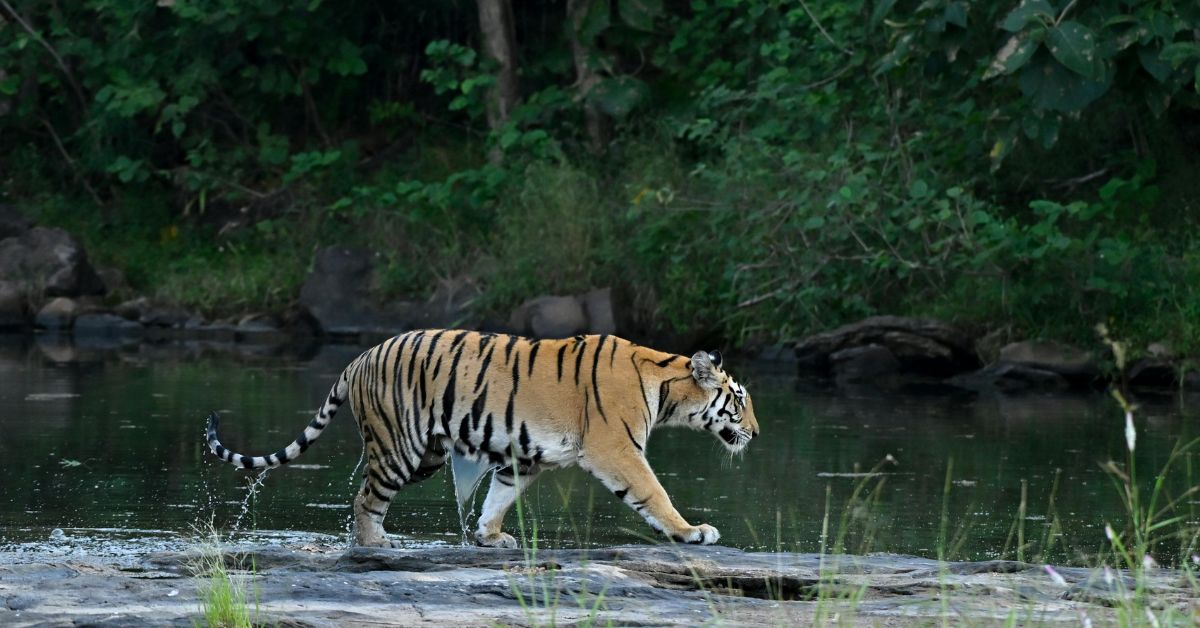
Gorumara National Park is a premier wildlife destination in the Dooars region, which spans 80 sq. km.
This national park is famous for its dense riverine forests, vast grasslands, and thriving population of the great Indian One-horned Rhinoceros, Asiatic elephants, and the Indian Bison.
- Best Time to Visit:
The peak season for tourism and clear wildlife viewing is from October to April, as the park remains closed during the monsoon, that is mid June to mid-September.
2. Jaldapara National Park
Jaldapara National Park is regarded as the crowning jewel of the Dooars region, being located in the Alipurduar district of West Bengal.
Spanning over 216.51 km, this sprawling savannah and riverine forest lies on the banks of the Torsa River.
It is known for boasting the world's second-largest population of the rare Indian one-horned rhinoceros.
- Best Time to Visit:
The park is open from October through May, with prime wildlife spotting occurring during the cooler winter months.
3. Buxa Tiger Reserve & Fort
One of the most captivating and ecologically diverse destinations in the Dooars region in the Dooars region is the Buxa Tiger Reserve and Fort.
It offers a rare mix of dense forests, trekking trails, remote villages, and significant historical ruins, spanning roughly 759 sq km in the Alipurduar district.
- Best Time to Visit:
November to April is considered the best time to visit the Buxa Tiger Reserve and Fort because it provides the best weather for trekking, birdwatching, and jungle safaris.
4. Chilapata Forest
Acting as a crucial elephant corridor between Jaldapara National Park and the Buxa Tiger Reserve, Chilapata Forest is a dense, offbeat wildlife sanctuary in the Dooars.
It is famed for its mysterious ambiance, rich biodiversity, and the ancient ruins of the Gupta-era Nalraja Garh fort, located about 20 km from Alipurduar and 15 km from Hasimara.
- Best Time to Visit:
The best time to visit this place is from October to April, because this time offers the most pleasant weather and maximum wildlife visibility.
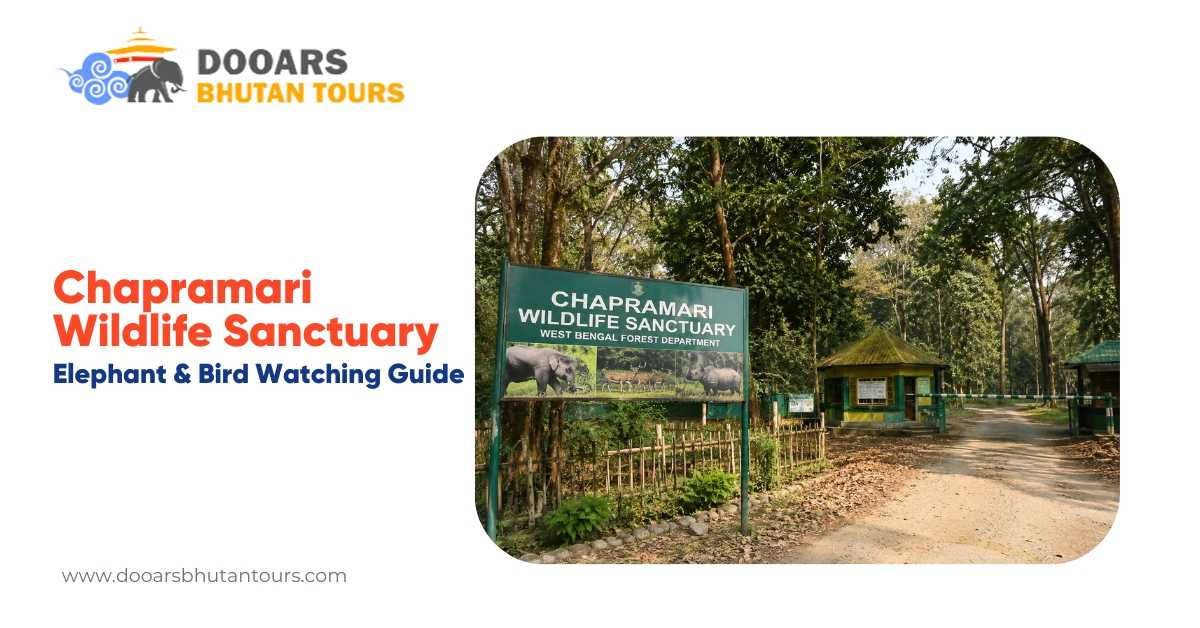
5. Chapramari Wildlife Sanctuary
Chapramari Wildlife Sanctuary is a premier eco-tourism destination in the Dooars and is physically an extension of the famous Gorumara National Park, separated from it by the flowing Murti River.
This dense, green subtropical forest is highly celebrated for its large population of wild Asian elephants and Indian bison or Gaurs.
- Best Time to Visit:
November to March is the absolute best time to visit Chapramari Wildlife Sanctuary. This time offers ideal weather, clear forest vistas, and the highest probability of spotting herds of elephants and Indian bison (Gaurs).
Scenic Riverside Retreats
1. Murti
Murti is a picturesque, serene riverside hamlet in the Dooars region, positioned beautifully between Gorumara National Park and the Chapramari Wildlife Sanctuary.
This destination derives its name from the sparkling Murti River that flows directly through it.
- Best Time to Visit:
November to March is the absolute best time to visit Murti, offering crisp, cool weather, crystal-clear river waters, and the highest chances of spotting wildlife gathering along the riverbed.
2. Jhalong & Bindu
Located along the Indo-Bhutan border in the northernmost stretch of the Dooars, Jhalong and Bindu are two interconnected, offbeat riverside hamlets.
Positioned on the banks of the roaring Jaldhaka River, they sit roughly 31 km to 43 km north of the forest base camp of Murti.
This makes them the ultimate twin day-trip or serene overnight stay destination.
- Best Time to Visit:
October to March is considered the best time to visit this place, with the weather staying cool and crisp, hovering between 12°C and 25°C.
During this time, the Jaldhaka River loses its muddy monsoon swirl, flowing perfectly crystal-clear over the boulders.
3. Jayanti
Jayanti is widely celebrated as the "Queen of Dooars" and is a serene forest village located deep inside the core area of the Buxa Tiger Reserve in West Bengal's Alipurduar district.
It introduces travellers to a rugged, adventurous landscape defined by historical trekking trails, hidden stalactite caves, and rich, untouched biodiversity.
- Best Time to Visit:
November to March is the peak season to travel here, and is the perfect window to visit Jayanti. During this time, the weather remains cool and crisp, ranging from 12°C to 24°C, making the sun-exposed riverbeds and hilly trekking routes highly comfortable to explore.
Offbeat & Hill Hamlets
1. Rocky Island
Rocky Island is one of the most beautiful, adventure-centric riverside destinations, located in the Himalayan foothills of the Kalimpong district in the Dooars.
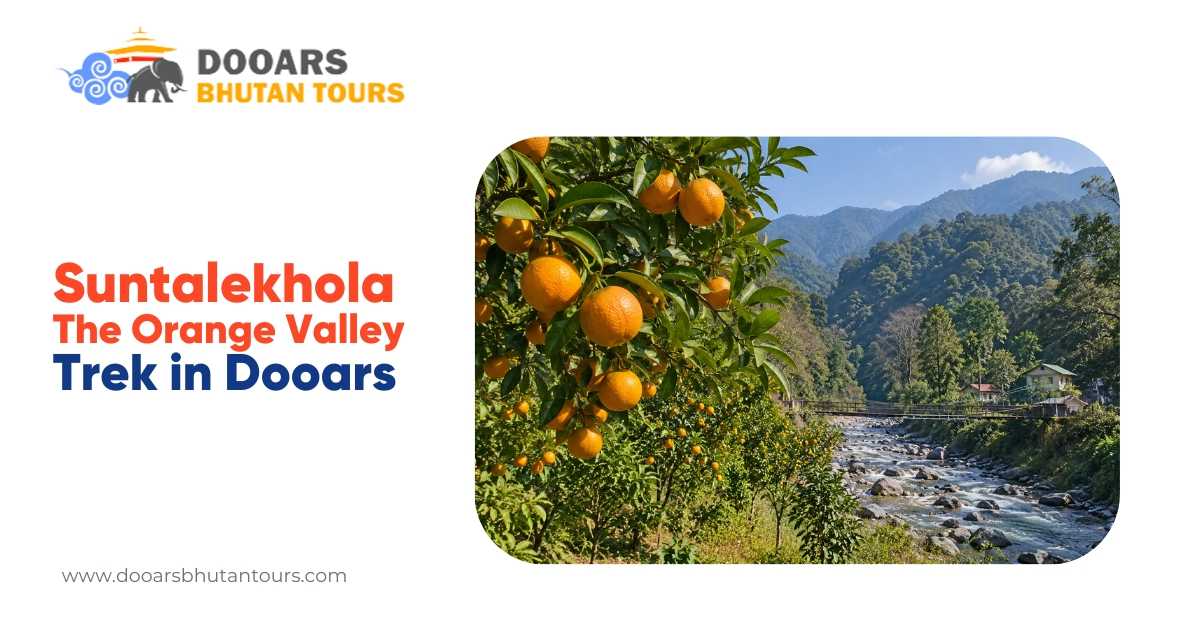
It is situated on the banks of the roaring, narrow Murti River and just 2 km uphill from the scenic tea hamlet of Samsing. This offbeat spot is famous for its colossal rock formations, vibrant orange orchards, and thrilling outdoor sports.
- Best Time to Visit:
October to May is the prime window to visit Rocky Island, because it is a long season that provides highly pleasant and congenial weather.
2. Lepchakha Village
Lepchakha Village, often crowned as the "Queen of Buxa" or the "Balcony of Dooars,". This is a pristine, hilltop tribal hamlet located at an altitude of approximately 2,500 feet within the Buxa Tiger Reserve.
It is perched close to the Indo-Bhutan border, and this secluded paradise is inhabited by the unique Drukpa people, who are of Bhutanese origin.
- Best Time to Visit:
October to May is the peak time to visit this beautiful village, because winter and spring offer perfectly crisp mountain air and cloudless, sunny days.
This ensures maximum visibility from the hilltop viewpoint, and the temperature stays comfortable, ranging between 10°C and 22°C.
A Season-by-Season Guide For The Best Time to Visit Dooars
Although Dooars is a year-round destination, the best time to visit is in Winter, that is, from October to February, as this period is ideal for wildlife safaris.
While March to May is considered the best for all budget travellers and fewer crowds, July to September is best for offbeat nature lovers seeking lush, rain-washed landscapes.
The reasons why these seasons are the best for visiting Dooars are listed below.
1. Winter: October to February, The Peak Season
Because the post-monsoon weather offers the most crisp, dry air and crystal-clear skies, Winter is considered the ideal time to visit Dooars.
This is the peak season of travel here, as this time is the best for the following things.
- Wildlife safaris,
- Birdwatching
- Enjoying the lush, green landscapes.
Why Visit in Winter:
You should definitely visit Dooars in the winter season because during this time the monsoon reduces, leaving behind lush greenery and crystal-clear skies.
It is also the absolute best period for jungle safaris, wildlife spotting, and birdwatching inJaldapara National Park and Gorumara National Park.
Key Highlights During This Time:You can experience the following things during this time.
- Elephant safaris,
- Spotting the one-horned rhinoceros, and
- Experiencing the vibrant local culture during theTeesta Tea and Tourism Fest.
Temperature:10° C to 25° C
2. Summer: March to May, The Shoulder Season
Summer, which is from March to May, is considered the prime shoulder season in Dooars because it is ideal for budget travelers and wildlife photographers. If you’re seeking to escape the crowds during winter, this is the time of travel for you.
The dry weather draws animals to waterholes, making wildlife safaris particularly rewarding, while lush spring foliage sets the perfect backdrop for exploring tea estates.
Why Visit in Summer:
Although the weather warms up, the dense, shaded forests and sweeping tea gardens make the climate manageable, especially in the early mornings and evenings.
It is a fantastic time for budget travelers to score great deals on resorts and avoid the winter tourist rush. And all these things make summer one of the best times to visit.
Key Highlights:You can do the following things during this season here.
- Sightseeing in spots like Samsing,
- Exploring Suntalekhola and
- Experiencing the Rocky Island, alongside early morning wildlife safaris before it gets too hot.
Temperature:Daytime temperatures hover around 21°C to 31°C.
3. Monsoon: July to September, The Off-Season
Travelling to Dooars during monsoon, that is, from July to September, is perfect for serene, crowd-free escapes, as this is the off-season.
This is because the heavy rains transform the Himalayan foothills into a lush, vibrant rainforest.
However, wildlife sanctuaries and national parks are completely closed to tourists during this period to support animal breeding.
Why Visit in Monsoon:
While torrential rains can limit sightseeing and national parks are generally closed, the forests transform into a vibrant, untouched paradise. It is the perfect escape for offbeat travelers, photographers, and nature lovers seeking peace.
Key Highlights:You can do the following things here during this time.
- Enjoy the torrential greenery, swollen rivers, and
- Enjoy completely secluded resort stays at discounted off-season prices.
Note:Travellers must take precautions against heavy rainfall, leeches, insect-borne diseases, road disruptions, and restricted activities. The Dooars region experiences intense downpours during the monsoon that can significantly impact safety and logistical planning.
Conclusion
The best time to visit Dooars is from October to March, because during these winter months, the weather is cool and dry. This makes it the prime season for jungle safaris inGorumara National Park and Jaldapara National Park, bird watching, and exploring the lush tea gardens.
However, choosing the best Dooars Tour Package depends entirely on your travel goals, as different seasons offer unique experiences.
To help you plan the perfect getaway, book your trip with Dooars Bhutan Toursto visit Dooars for safaris and enjoy its scenic views.
