



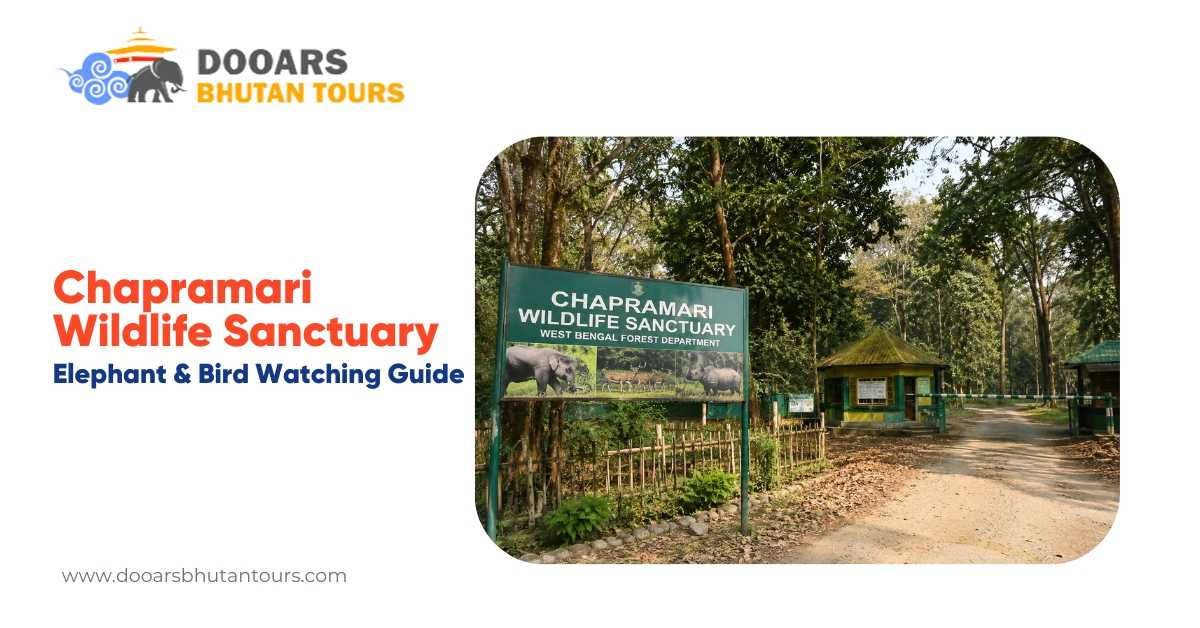

Chapramari Wildlife Sanctuary is a wildlife destination to consider including in a Dooars-based itinerary if you are a nature lover. The forest sanctuary, located near Gorumara National Park and divided from the latter by the Murti River, is renowned primarily for its elephants, Indian gaur, and diverse birdlife.
According to the Department of Tourism, Government of West Bengal, Chapramari covers approximately 960 hectares in area and was declared a wildlife sanctuary in 1998. Per the official tourism site, the watchtower is particularly recommended for spotting native and migratory birds that can be found in the vicinity of the river.
Why Visit Chapramari?
Chapramari is a place where you can enjoy a forest trail in more peaceful conditions with the river and nature as your backdrop. This Dooars forest sanctuary is popular with tourists specifically for spotting the Asian elephants and Indian gaur, particularly in their natural habitat.
As for birdwatchers, the forest and riverine backdrop offer a chance to spot both resident and migratory birds.
Elephant spotting in Chapramari
The elephants in Chapramari Wildlife Sanctuary are one of the main attractions of the sanctuary, as part of the forest falls within the Dooars region. As far as the wildlife experience goes, it is best to keep a patient attitude and not expect to spot an elephant right away in the region. Wildlife can sometimes stay hidden in thick undergrowth; wildlife spotting is dependent on the season too.
Tips for elephant watching :
- Follow the directions given by your forest guide and safari staff
- Keep a safe distance from elephants at all times
- Do not attempt to approach, feed, or lure an animal
- Do not raise your voice or make sudden movements
- Bring binoculars for wildlife spotting from afar
- Have your camera at hand, but do not bother wildlife with photography
The aim should be to enjoy a nature trail and observe elephants from a safe distance.

Bird watching in the Sanctuary
Chapramari is a great place for bird watching, as per the Department of Tourism's mention of the watchtower as a place to observe native and migratory birds that frequent the river area. The forest sanctuary has the right mix of forest, river banks, and water bodies that offer habitat to a range of bird species.
It is always a good idea to bring binoculars and a small notebook for a bird-watching experience in the sanctuary if you are the type of bird watcher who likes to note down the birds they spot. Bird watching in forests often involves scanning the canopy of the trees for the telltale signs of birds, which is why binoculars are so necessary.
How to maximise the bird-watching experience
Start early: Birds are often most active in the morning.
Bring binoculars: Many birds will be up in the canopies and/or at a distance.
Listen closely: You may hear the call of a bird that you cannot see.
Wear muted clothes: Avoid loud clothing when in the wild.
Be patient: Bird watching is an observational activity, not a race.
Chapramari Watchtower: A prime wildlife spot
The watchtower in Chapramari takes pride of place as a wildlife spot, due to the elevated vantage point that provides great views over the forest and surrounding riverine landscapes. West Bengal Tourism even highlights the watchtower in its listing of the “must-see ".
Wildlife spots in West Bengal, with a particular mention of the area for spotting native and migratory birds. In addition, watchtowers offer great scope for observing larger animals from a safe distance.
Rather than focusing solely on the elephants, it is worth looking around the forest edges, water sources, and the tree canopy for a wealth of birdlife and other wildlife.
When is the best time to visit?
The best time to visit the sanctuary depends on what you want out of your forest always best to check with the local forest authorities for the latest rules and advisories prior to your trip, as access to the forest may be dependent on the season. In terms of the climate, a wildlife enthusiast may find the cool and dry months to be the best time to visit the Dooars region.
How to get there
Chapramari Wildlife Sanctuary is located in the Dooars region of Jalpaiguri district, which means that it can be included as a stop in a Dooars itinerary that covers Gorumara, Murti, Chalsa and the other local forests. The Jalpaiguri Chapramari Wildlife Sanctuary mentions that Bagdogra Airport is a nearby airport and that New Jalpaiguri is a primary junction for the area, after which road travel to the sanctuary is required.
When planning a trip to the sanctuary always best to check with the local authorities for the latest access information.
Responsible Wildlife Watching
A trip to a wildlife destination is always a memorable one, but responsible wildlife watching is key to ensuring that future tourists have a positive wildlife experience. Remember that Chapramari is a protected forest and that you are expected to follow wildlife and general forest rules when enjoying the sanctuary. Do not litter, play music, feed the animals, or wander off the designated trails.
Most importantly, remember that wildlife spotting is never a given. The purpose of a wildlife trip is to enjoy the forest and its natural beauty, observing the local fauna without disturbing or deterring it.
Morning vs Evening Wildlife Experience :
Choosing the right time can make your Chapramari Wildlife Sanctuary experience more enjoyable. Both morning and evening offer different opportunities for wildlife and bird watching.
Morning Safari :
Morning is a great choice for travellers interested in bird watching. The forest is generally quieter, and birds can be more active during the early hours. The cooler atmosphere can also make a morning forest excursion comfortable.
If your priority is spotting birds and enjoying the peaceful forest environment, morning is a good option.
Evening Safari :
An evening visit offers a different atmosphere as the forest begins to change with the approaching dusk. You may have opportunities to observe animals becoming active, but sightings are never guaranteed.
The changing light can also create an attractive setting for photography, provided photography is permitted and does not disturb wildlife.
Which is better?
- For Bird watching: Morning is generally preferable.
- For a quieter forest experience: Morning can be ideal.
- For observing evening animal activity: Evening can be interesting.
- For first-time visitors: Choose the timing that fits your authorised safari schedule and current forest regulations.
Well, ultimately wildlife watching depends on season, weather, animal movement, and luck, so there is no guarantee of sightings.
Forest Etiquette: Do’s and Don'ts for visitors
A visit to Chapramari Wildlife Sanctuary is an opportunity to observe wildlife in its natural habitat. Following basic forest etiquette helps protect animals, birds, and the surrounding ecosystem while making the experience safer for visitors.
Do’s
- Follow your forest guide's instructions throughout the safari or forest visit.
- Maintain a safe distance from wildlife, especially elephants and other large animals.
- Keep noise levels low so you don't disturb birds and animals
- Carry binoculars for observing wildlife from a distance
- Keep the forest clean and take all waste back with you
- Stay inside designated safari vehicles or permitted areas
- Be patient while watching wildlife rather than trying to attract animals
- Respect forest rules and restricted areas.
Don'ts:
- Do not feed or offer food to wild animals
- Do not try to approach, chase, or attract elephants for photographs
- Do not play loud music or shout inside the forest
- Do not litter or leave plastic, food wrappers, or other waste behind
- Do not use flash photography if it may disturb wildlife
- Do not attempt to touch or interact with wild animals
- Do not ignore instructions from forest officials or guides
Why Forest Etiquette Matters :
Responsible behaviour helps minimise disturbance to wildlife and allows the forest rather than a crowded tourist attraction. The best wildlife encounter is one where the animal remains undisturbed, and you remain a respectful observer.
Final Thoughts
A wildlife trip to Chapramari Wildlife Sanctuary is an exciting one for those who want to experience the Dooars differently. From the forest and the Murti River to the watchtower, the forest sanctuary provides an opportunity to enjoy the natural beauty of North Bengal in a slower and more natural way.
It is all about selecting the right combination of forests, transportation, and accommodation in the area for a responsible wildlife trip that delivers. Dooars Bhutan Tours can help you with a Dooars travel itinerary that includes Chapramari Wildlife Sanctuary elephant spotting, bird watching, and other North Bengal and Bhutan destinations.
FAQS :
1. What is Chapramari Wildlife Sanctuary famous for?
Chapramari Wildlife Sanctuary is particularly famous for its large elephant population. The sanctuary is also home to gaur, leopards, deer, wild boar, and several bird species.
2. Can you watch elephants at Chapramari?
Yes. Elephant watching is one of the major wildlife experiences at Chapramari. Along with elephants, gaur and rhinos are among the animals frequently seen in the sanctuary.
3. Where is Chapramari Wildlife Sanctuary located?
Chapramari is located in the Dooars region of Jalpaiguri, West Bengal, near Gorumara National Park. The Murti River separates Chapramari from Gorumara.
4. What is the best place for bird watching in Chapramari?
The Chapramari watchtower is a popular spot for observing birds and viewing the surrounding forest and river landscape.
5. What other animals can be seen in Chapramari?
Visitors may encounter gaur , leopards , spotted deer , chital , sambar , barking deer, and wild boar. Rhinoceros may also occasionally be seen.
6. Is a safari available at Chapramari Wildlife Sanctuary?
Yes, visitors can explore the forest through authorised safari arrangements. It is advisable to check current forest rules and availability before visiting.

