
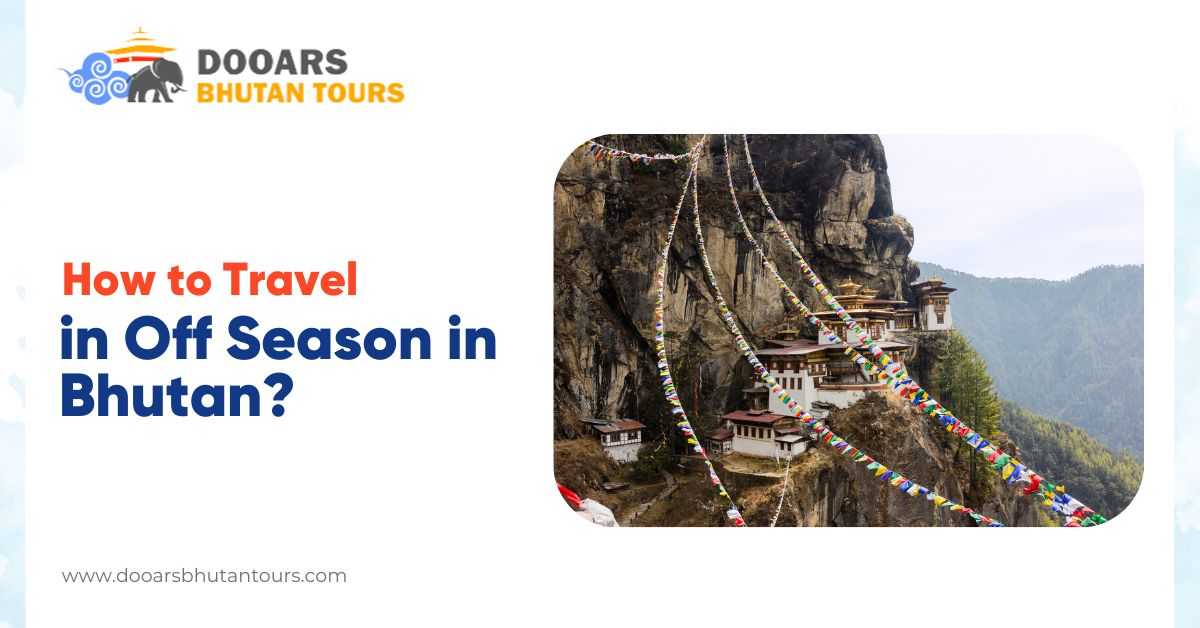

Traveling to Bhutan during the peak seasons offers the best views and culture of Bhutan. The peak season is in Spring and Autumn, in the months between March and May and September and October. The off-season of Bhutan may be the rest of the year.
However, if you don’t know how to plan for an off-season trip to Bhutan, you can take the help of one of the best Bhutan tour operators to do so.
If you want to travel and experience Bhutan in a free way, that is, with not many people around, the off-season will be the best choice for you.
One such benefit or perk of travelling to Bhutan in the off-season is that this season provides a chance to explore with fewer tourists and at more affordable rates.
Whether you want to experience the serenity of Bhutan during winter travel or you want ot experience the lush vibrancy of summer travel to Bhutan, this country offers it all.
You can discover unique cultural experiences in a Quiet Season Bhutan Tour, benefit from Bhutan Off Season Discounts, and enjoy a more authentic journey through this Himalayan paradise.
Firstly, let’s start with knowing,
What are the places to visit in Bhutan during the off-season?
To experience landmarks without the crowds at a more affordable price is the prime reason why you should travel to Bhutan during its off-season.
But, depending on whether you visit during the winter between December and February, or the monsoon between June and August, the ideal destinations shift significantly.
These seasons are ideal for those seeking a Less Crowded Time to visit Bhutan.
However, this list highlights the places you can visit during the off-season in Bhutan
Top Winter Travel Destinations, between December and February
Winter offers crisp, clear Himalayan views and sunny days, though nights are cold. Travelling during this season is best for people who love winter.
Also offering the most clarity, beautiful views, and sunny days as well, it is also best for people who love nature-driven things.
1. Punakha:
Offering warm, sunny days, clear skies, and mild temperatures compared to the rest of the country, Punakha is an excellent winter destination, which is between December and February, in Bhutan.
While avoiding the peak season crowds, it is ideal for exploring the iconic Punakha Dzong, enjoying the scenic, temperate valley, and hiking.
This is the best winter destination due to its lower altitude, which is approx. 1,200m. For a trek through the valley, you can visit the iconic Punakha Winter Trek or the Dzong.
2. Phobjikha Valley, or Gangtey:
The Phobjikha Valley, or Gangtey, serves as the winter home for hundreds of rare black-necked cranes, and is a vast, high-altitude glacier valley.
Phobjikha is significantly colder due to its elevation of nearly 3,000 metres, with temperatures often dropping below freezing at night, unlike the mild winters of Punakha.
This is also considered one of the most magical winter spots. Here, you can explore the Gangtey Nature Trail or the Gangtey Monastery.
3. Dochula Pass:
The Dochula Pass becomes a mystical gateway, often blanketed in snow during winter, that is, from December to February. It is a breathtaking mountain pass at an altitude of 3,100 meters or 10,171 ft.
This offers some of the clearest views of the high Himalayan peaks, with snow-laden Himalayan views here.
4. Royal Manas National Park:
For those seeking a sub-tropical escape, this is Bhutan’s oldest protected area and a prime winter destination, from November to February.
This southern park offers a warm, dry climate that is ideal for wildlife spotting and river adventures, unlike the snowy passes of the north.
This is a great low-altitude option for wildlife lovers in the winter months.
.jpg)
Top Summer Travel Destinations, between June and August
Summer is the season when the landscape turns a vibrant green despite the monsoon rains. Because of this, it is also called the Emerald Season.
This season, travel is best for visitors who love to enjoy greenery around them, making it a favorite for nature lovers.
1. Haa Valley:
While much of the country experiences heavy monsoon rain, Haa remains vibrant and emerald-green, offering a cool, high-altitude escape with unique cultural experiences.
Famous for the Haa Summer Festival in July, which celebrates nomadic life, local culture, and traditional sports.
This place is often called the Hidden-Land Rice Valley, Haa Valley, and is arguably Bhutan’s most enchanting summer destination.
2. Thimphu & Paro:
Thimphu and Paro are exceptionally resilient off-season destinations, as the primary entry and cultural hubs of the country.
These cities offer a dense concentration of indoor and weather-proof experiences.
Whether you are ducking into a museum during a summer monsoon shower or catching the sharp, clear Himalayan sunlight in winter, these cities offer it all.
You can explore Simply Bhutan, a living museum in Thimphu, which offers indoor cultural experiences like traditional dance and archery demonstrations regardless of the weather.
3. Bumthang:
Bumthang is composed of four distinct valleys, which are Chokhor, Tang, Chhume, and Ura, and is often called the spiritual heartland of Bhutan.
While its off-season charm lies in its quiet monasteries and misty, emerald-green landscapes, it’s one of the coldest regions in winter.
The lush forests and ancient temples like Jakar Dzong are particularly scenic. Known as the "Switzerland of the East," its apple and pear orchards are in full bloom in June.
Coming to the main question,
How to Travel in the Off-Season in Bhutan?
The off-season of Bhutan is considered to be its winter and monsoon seasons. Those are the months between December and February, and June to early September.
While the winter season is defined by clear blue skies and exceptional visibility, it is the best time for photography and uncrowded Himalayan views.
The monsoon season is known as the "Emerald Season" because the landscapes become incredibly lush and vibrant. But many travelers avoid this season due to the rain.
The following are also some of the reasons why you should travel to Bhutan in its off-season
1. Secure Your Permits and Documents
Since Bhutan is another country, all visitors must obtain travel documents to enter the kingdom, though the process differs by nationality. These permits and documents act as your best friend during the whole trip.
- For Indian Citizens: Indian citizens do not need a visa but must obtain an Entry Permit. You can apply on arrival at Paro International Airport, at the Phuentsholing border, or online through the Bhutan Immigration Services Portal.
- For International Tourists: International Tourists must obtain an e-Visa, a US$40 fee through the official immigration portal or a licensed tour operator before arrival. This is essential to avoid any misconduct during the trip.
- Essential Document Requirements: Ensure your Passport or Voter ID for Indians has at least 6 months of validity. You will also need confirmed hotel bookings and proof of travel insurance. These are the essential documents required for your Bhutan trip.
2. Payment of the Sustainable Development Fee or SDF
Because Bhutan focuses on Sustainable living and less carbon use, it imposes a mandatory daily fee paid by all tourists to support Bhutan's conservation efforts.
This is related to maintaining the Sustainable Living standard of Bhutan called the Sustainable Development Fee or SDF.
- Fee for Indian Tourists:For Indian tourists its ₹1,200 per person per night.
- Fee for International Tourists: For International tourists, this is US$100 per person per night.
- Other Exemptions:Other exemptions include children under 5, and children aged 6 to 12 receive a 50% discount.
3. Off-Season Logistical Tips
- Use of Transport: While a certified Bhutanese guide is required for travel beyond these valleys, Indian nationals can travel without a mandatory guide in Paro and Thimphu. But self-driving is not permitted fr forign tourists; you must use a Bhutan-registered vehicle with a driver.
- Mindful Packing for Winter, Dec to Feb:Because valley temperatures can range from 10 to 18°C during the day but drop to 0 to 8°C or lower at night. Bring thermals, a windproof jacket, and wool socks. Dress in layers; this will make sure you stay warm during these cold, harsh weather conditions. Preventing the cause of any disease.
- Mindful Packing for Monsoon, Jun to Aug: Bring reliable rain gear, including a sturdy umbrella or rain jacket, and waterproof walking shoes. As rainfall can be pretty heavy in this country, carrying these things will make sure you’re in safe hands.
- Take Care of Accommodations: Confirm your hotel has proper heating, for winter, or reliable Wi-Fi, as you may spend more time indoors due to the weather. Ensuring these things will make your stay worthwhile in these kinds of seasons.
- Take Care of Currency: Indian currency up to ₹500 notes is widely accepted. However, UPI is not accepted, so carry enough cash for small expenses. This will make sure that you don’t get any inconvenience during your trip.
Conclusion
While most people travel to destinations in their prime season, travelling during the off-season also has its own benefits.
For a country like Bhutan, its peak seasons are Spring and Autumn, which are the months between March and May, and September to November.
These off-seasons can be considered the remaining months.
One of the major benefits of traveling in the off-season are its provides a chance to explore with fewer tourists and at more affordable rates.
Whether you want to experience the serenity of Bhutan during winter travel or you want ot experience the lush vibrancy of summer travel to Bhutan, this country offers it all.
If you are a first-time traveller, then with the help of some of the best Bhutan tour operators, you can make this trip remarkable.
One such tour operator is Dooars Tours & Travels. They are an experienced tour operator in Jaigaon providing services across India and Bhutan.
They specialize in Air and Train ticket Booking, Car and Bus rentals, Hotel Reservations, discounted hotel packages, cheap tour packages, custom-made travel packages, wildlife travel packages, and culture tours.
And as one of the best travel agencies, they believe in innovation, creativity, & services, so their clients can count on them for hassle-free services.
Book the best tour operator near you to experience Bhutan like never before.

